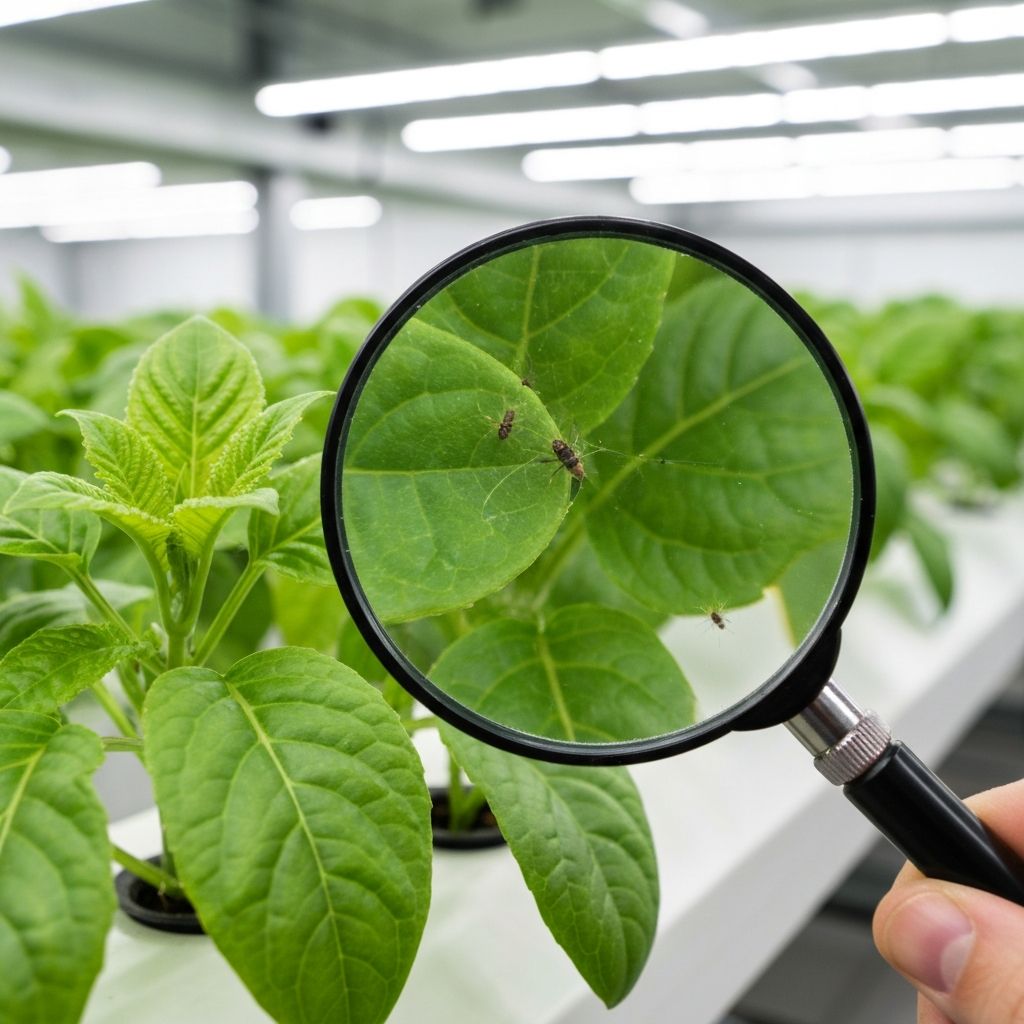
Even indoor farms can face pest problems. Early detection and organic prevention methods keep your crops healthy without chemical pesticides.
Common Indoor Farm Pests
Aphids - Tiny pear-shaped insects (green, black, or white) - Found on undersides of leaves and new growth - Secrete sticky honeydew - Cause curled, yellowing leaves
Spider Mites - Microscopic red or brown mites - Create fine webbing on leaves - Cause stippled, bronze-colored leaves - Thrive in hot, dry conditions
Fungus Gnats - Small black flies around growing medium - Larvae damage roots - Thrive in consistently wet conditions - Often indicate overwatering
Whiteflies - Tiny white flying insects - Cluster on leaf undersides - Fly up in clouds when disturbed - Weaken plants through sap feeding
Thrips - Slender, fast-moving insects - Cause silvery streaks on leaves - Spread plant viruses - Difficult to control once established
Prevention Strategies
Environmental Controls: - Maintain proper humidity (50-70%) - Ensure good air circulation - Keep growing area clean - Quarantine new plants for 2 weeks - Use yellow sticky traps for monitoring
Cultural Practices: - Remove dead plant material promptly - Don't overwater (prevents fungus gnats) - Inspect plants regularly (weekly minimum) - Sterilize equipment between uses - Start with clean, pest-free transplants
Organic Treatment Options
Neem Oil Spray: - Mix 1 tsp neem oil + 1 tsp soap per quart water - Spray thoroughly, including undersides - Apply every 7-14 days preventatively - Effective against most soft-bodied insects
Insecticidal Soap: - Use commercial insecticidal soap or DIY - Works on contact - must hit the pest - Safe for food crops - May need multiple applications
Beneficial Insects: - Ladybugs for aphids - Predatory mites for spider mites - Parasitic wasps for whiteflies - Beneficial nematodes for fungus gnat larvae
Integrated Pest Management (IPM)
1. Monitor - Check plants weekly, use sticky traps 2. Identify - Know exactly what pest you're dealing with 3. Threshold - Decide action level (a few pests may be okay) 4. Prevent - Implement cultural controls first 5. Treat - Use least toxic option that's effective 6. Evaluate - Assess results and adjust approach
Pro Tips
- •Prevention is always easier than treatment
- •Inspect new plants before adding to your farm
- •Keep a hand lens for early detection
- •Document pest issues to identify patterns
- •Rotate treatment methods to prevent resistance