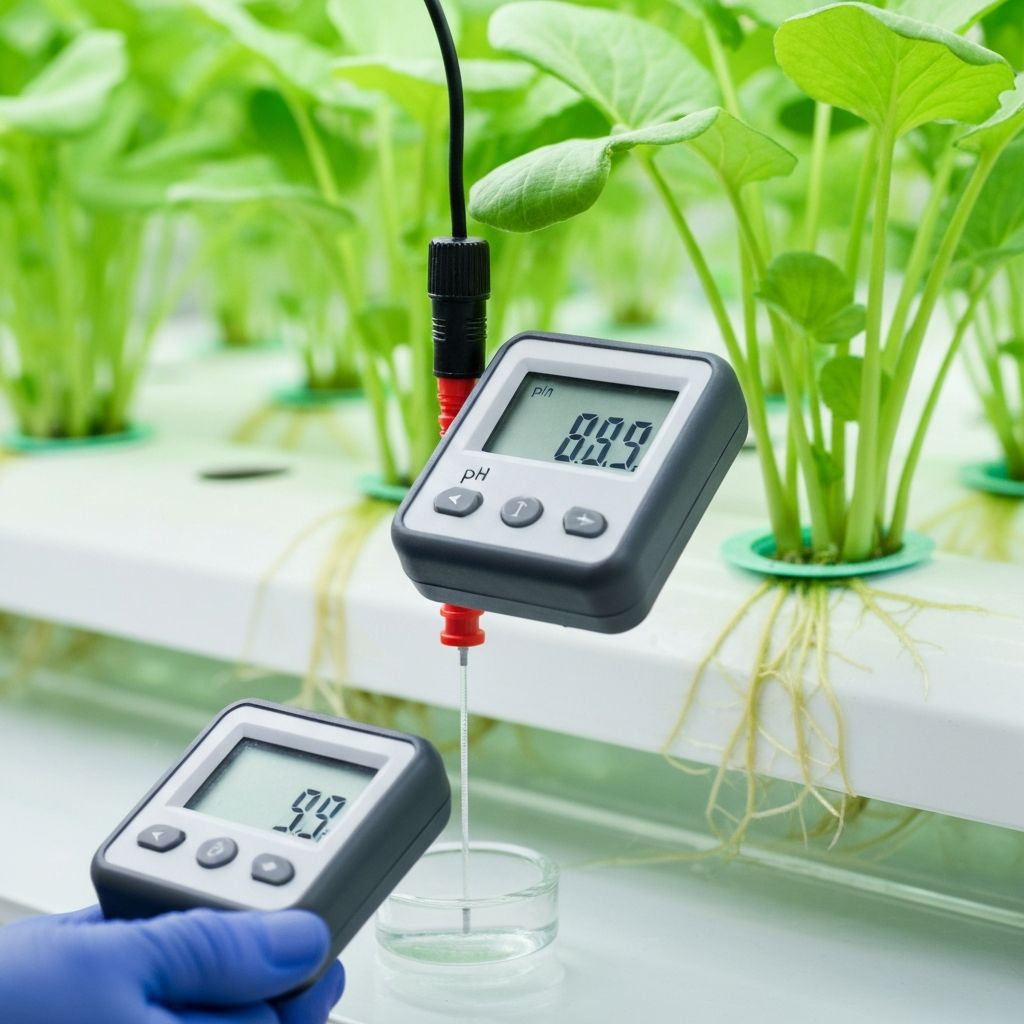
Proper nutrient management is the foundation of successful hydroponic growing. Unlike soil-based gardening where nutrients are slowly released from organic matter, hydroponic systems require precise control of mineral nutrition.
The Essential Nutrients
Plants require 17 essential nutrients for healthy growth:
Macronutrients (needed in large amounts): - Nitrogen (N) - Leaf growth and chlorophyll production - Phosphorus (P) - Root development and flowering - Potassium (K) - Overall plant health and disease resistance - Calcium (Ca) - Cell wall structure - Magnesium (Mg) - Chlorophyll component - Sulfur (S) - Protein synthesis
Micronutrients (needed in trace amounts): Iron, Manganese, Zinc, Boron, Copper, Molybdenum, Chlorine, and Nickel
Understanding EC (Electrical Conductivity)
EC measures the concentration of dissolved salts (nutrients) in your solution. It's expressed in millisiemens per centimeter (mS/cm) or parts per million (PPM).
Recommended EC Levels by Crop Type: - Seedlings: 0.5-0.8 mS/cm - Lettuce & Leafy Greens: 1.2-1.8 mS/cm - Herbs: 1.0-1.6 mS/cm - Tomatoes: 2.0-3.5 mS/cm - Peppers: 1.8-2.5 mS/cm
pH Management
The pH of your nutrient solution affects nutrient availability. Even if nutrients are present, plants can't absorb them if pH is wrong.
Optimal pH Ranges: - Most vegetables: 5.5-6.5 - Leafy greens: 5.5-6.0 - Tomatoes: 5.8-6.3 - Herbs: 5.5-6.5
Adjusting pH: - Use pH Down (phosphoric acid) to lower pH - Use pH Up (potassium hydroxide) to raise pH - Always add adjusters slowly and retest
Mixing Your Nutrient Solution
1. Start with clean, filtered water 2. Test your base water EC and pH 3. Add nutrients according to manufacturer's instructions 4. Mix Part A and Part B separately before combining 5. Test final EC and adjust if needed 6. Test pH and adjust to target range 7. Let solution sit for 30 minutes, retest and adjust
Nutrient Deficiency Signs
Nitrogen Deficiency: Yellowing of older/lower leaves Phosphorus Deficiency: Purple or dark green leaves Potassium Deficiency: Brown leaf edges (tip burn) Calcium Deficiency: Blossom end rot, curled new leaves Magnesium Deficiency: Interveinal yellowing Iron Deficiency: Yellowing between veins on new leaves
Pro Tips
- •Always add nutrients to water, not water to nutrients
- •Replace your nutrient solution every 1-2 weeks
- •Monitor EC daily - it rises as water evaporates
- •Keep nutrients stored in a cool, dark place
- •Use separate measuring containers for each nutrient part