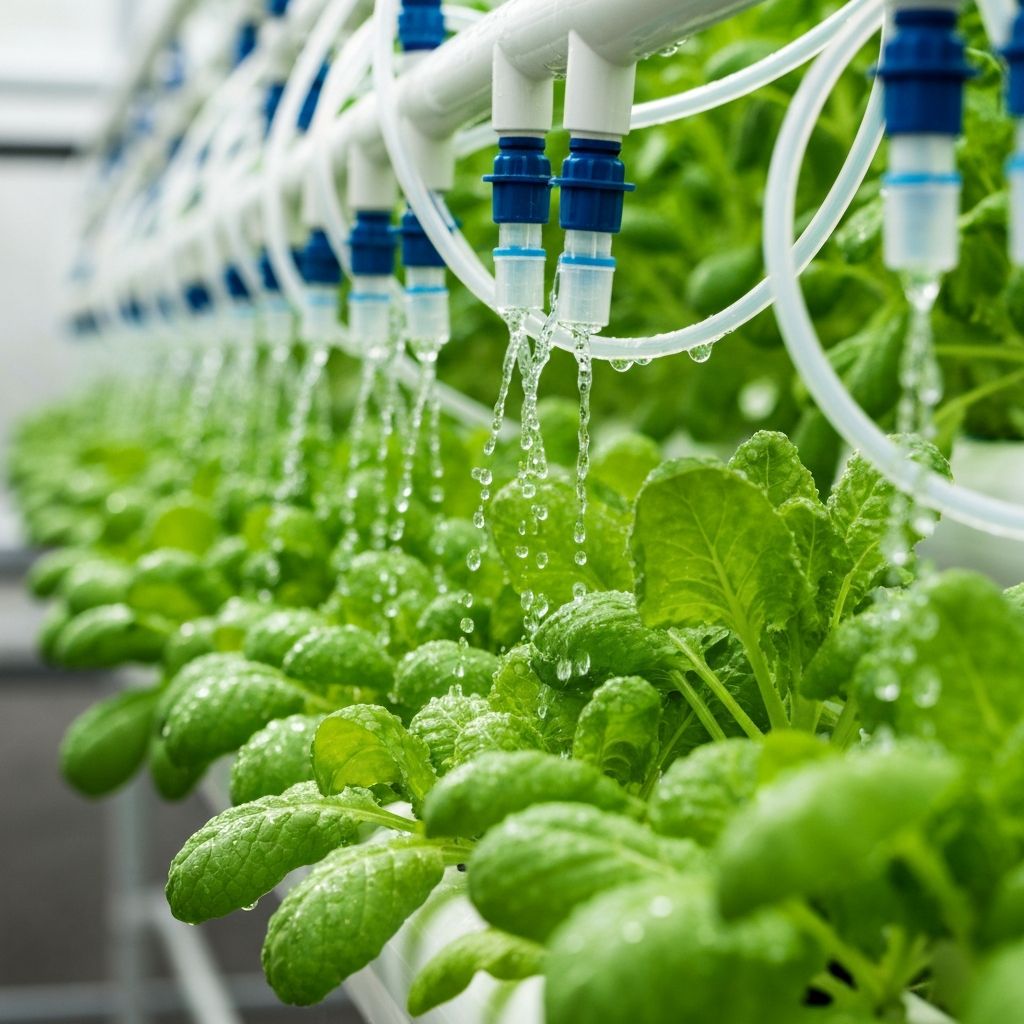
Drip irrigation delivers water directly to plant roots, minimizing waste and ensuring consistent moisture levels. This guide walks you through setting up a reliable automated system.
Benefits of Drip Irrigation
- Water Efficiency: Uses 30-50% less water than overhead watering - Consistent Moisture: Plants receive steady, reliable hydration - Reduced Disease: Keeps foliage dry, preventing fungal issues - Time Savings: Automation frees you from daily watering - Nutrient Delivery: Can integrate with fertigation systems
Components You'll Need
1. Reservoir Tank - Holds nutrient solution (20-50 gallons for small setups) 2. Submersible Pump - Moves water through the system (300-600 GPH) 3. Main Line Tubing - 1/2" or 3/4" poly tubing 4. Drip Line/Emitters - 1/4" tubing with inline drippers 5. Timer - Digital timer for scheduling 6. Filter - Prevents clogged emitters 7. Pressure Regulator - Maintains consistent flow 8. Fittings - Connectors, tees, elbows, end caps
Installation Steps
Step 1: Plan Your Layout - Map out plant positions - Calculate total tubing length needed - Determine number of emitters
Step 2: Set Up the Reservoir - Place tank at or below growing level - Install submersible pump - Add filter to pump outlet
Step 3: Run Main Line - Connect main tubing to pump - Route along the base of growing area - Secure with clips every 12-18 inches
Step 4: Install Drip Lines - Punch holes in main line for drip tubing - Insert barbed connectors - Run 1/4" tubing to each plant - Add drip emitters (1-2 GPH typical)
Step 5: Test the System - Run water through before connecting plants - Check for leaks at all connections - Verify even flow from all emitters
Programming Your Timer
Recommended Schedules: - Seedlings: 2-3 times daily, 5-10 minutes each - Vegetative: 3-4 times daily, 5-15 minutes each - Mature plants: 4-6 times daily, 10-20 minutes each
Adjust based on: - Growing medium water retention - Plant size and transpiration rate - Temperature and humidity levels
Maintenance Tips
- Flush system weekly with plain water - Clean filter monthly - Check emitters for clogs regularly - Replace tubing annually or when degraded - Sanitize reservoir between crop cycles
Pro Tips
- •Start with more frequent, shorter watering cycles
- •Monitor runoff to gauge if you're overwatering
- •Keep a spare pump and emitters on hand
- •Use black tubing to prevent algae growth
- •Label your lines for easy troubleshooting